
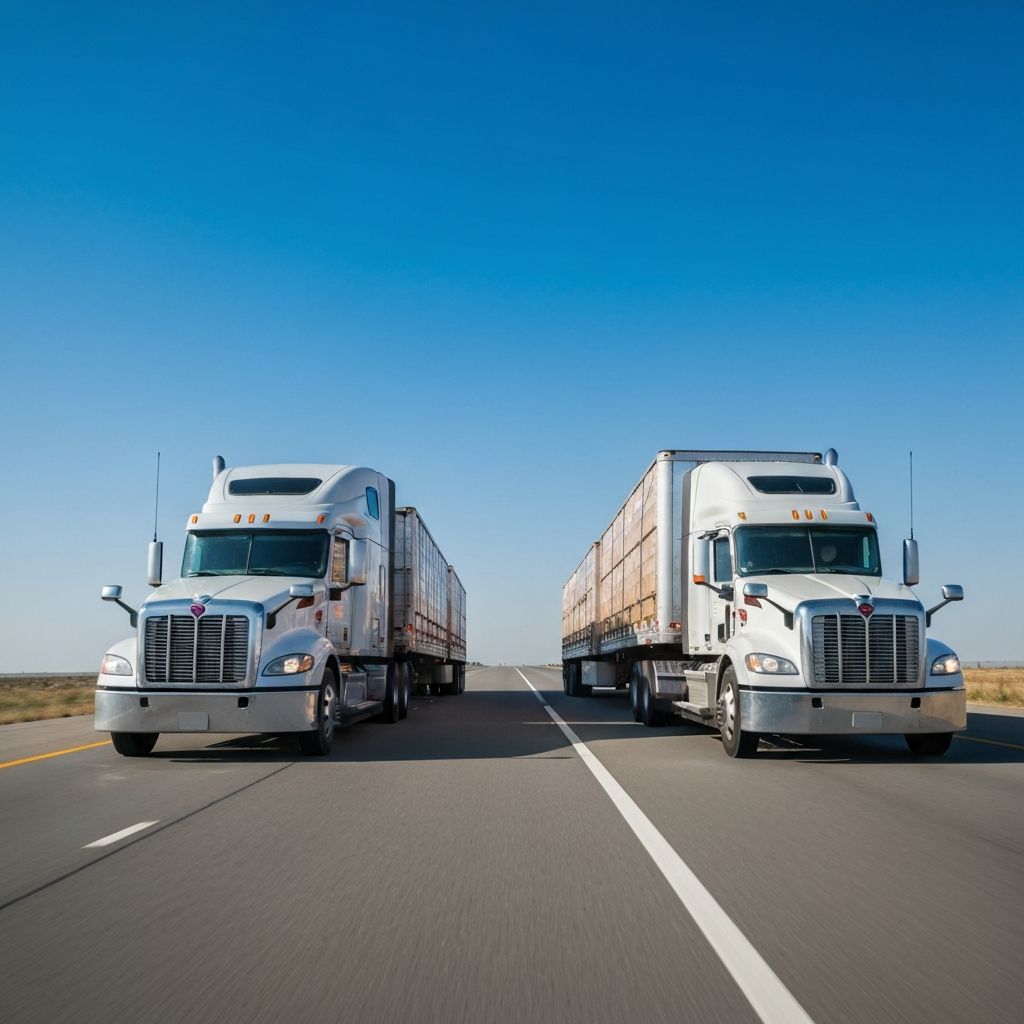
Choosing between Less-Than-Truckload (LTL) and Full Truckload (FTL) shipping is one of the most important logistics decisions a business can make. Each has distinct advantages depending on your shipment size, budget, and delivery timeline.
What Is LTL Shipping?
LTL shipping is designed for freight that doesn't fill an entire trailer. Your goods share space with shipments from other businesses, and you only pay for the portion of the trailer you use. LTL is ideal for shipments between 150 lbs and 15,000 lbs.
What Is FTL Shipping?
FTL shipping dedicates an entire trailer to your freight, regardless of whether it's completely full. This is the go-to option for large shipments, time-sensitive deliveries, or fragile goods that shouldn't be handled multiple times.
Key Differences
Cost: LTL is generally cheaper for smaller shipments since costs are shared. FTL becomes more cost-effective when your freight fills more than half a trailer. Transit Time: FTL shipments are typically faster because the truck goes directly from origin to destination without stops. LTL involves multiple pickups and deliveries along a route. Handling: LTL freight is loaded and unloaded multiple times at carrier terminals, increasing the risk of damage. FTL shipments are loaded once and unloaded once.
When to Choose LTL
Choose LTL when your shipment is 1-6 pallets, you have flexible delivery timelines, you want to reduce per-shipment costs, and you ship regularly but in smaller quantities.
When to Choose FTL
Choose FTL when your shipment fills more than half a trailer (typically 10+ pallets), delivery speed is critical, your freight is fragile or high-value, or you need guaranteed delivery windows.
The TotalShip Advantage
With TotalShip's NoviShip platform, you can instantly compare both LTL and FTL rates from top carriers. Our system automatically recommends the most cost-effective option based on your shipment details, helping you make the right choice every time.